
Our Recommended VPNs
Chosen after real-world testing across speed, privacy, and streaming. Each ranking is independent — we buy every VPN at retail and test it ourselves.

Fastest speeds, audited no-logs, 6000+ servers

Unlimited devices, CleanWeb blocker, 100+ countries

Swiss privacy laws, open-source, free tier

Lifetime plans, 10 devices, ad blocker

Unlimited devices, streaming-optimized, audited no-logs
We earn a commission when you click “Get” buttons, at no extra cost to you. Read our affiliate disclosure
Why Crypto Needs Extra Security
Cryptocurrency transactions are irreversible. If your crypto is stolen, there's no bank to call, no chargeback to file, and no insurance to claim. For remote workers paid in crypto or holding digital assets, security is paramount.
The Crypto Attack Surface
Remote workers with crypto face unique risks:
- Exchange account phishing — Fake login pages for Coinbase, Binance, Kraken
- Clipboard hijacking — Malware that replaces copied wallet addresses with the attacker's address
- SIM swap attacks — To bypass SMS 2FA on exchange accounts
- Man-in-the-middle on public Wi-Fi — Intercepting exchange API traffic
- Fake DeFi dApps — Phishing sites that drain wallet permissions
Protection Layers
1. Hardware Wallet (Non-Negotiable for Significant Holdings)
Store any crypto worth more than you'd carry in cash on a hardware wallet:
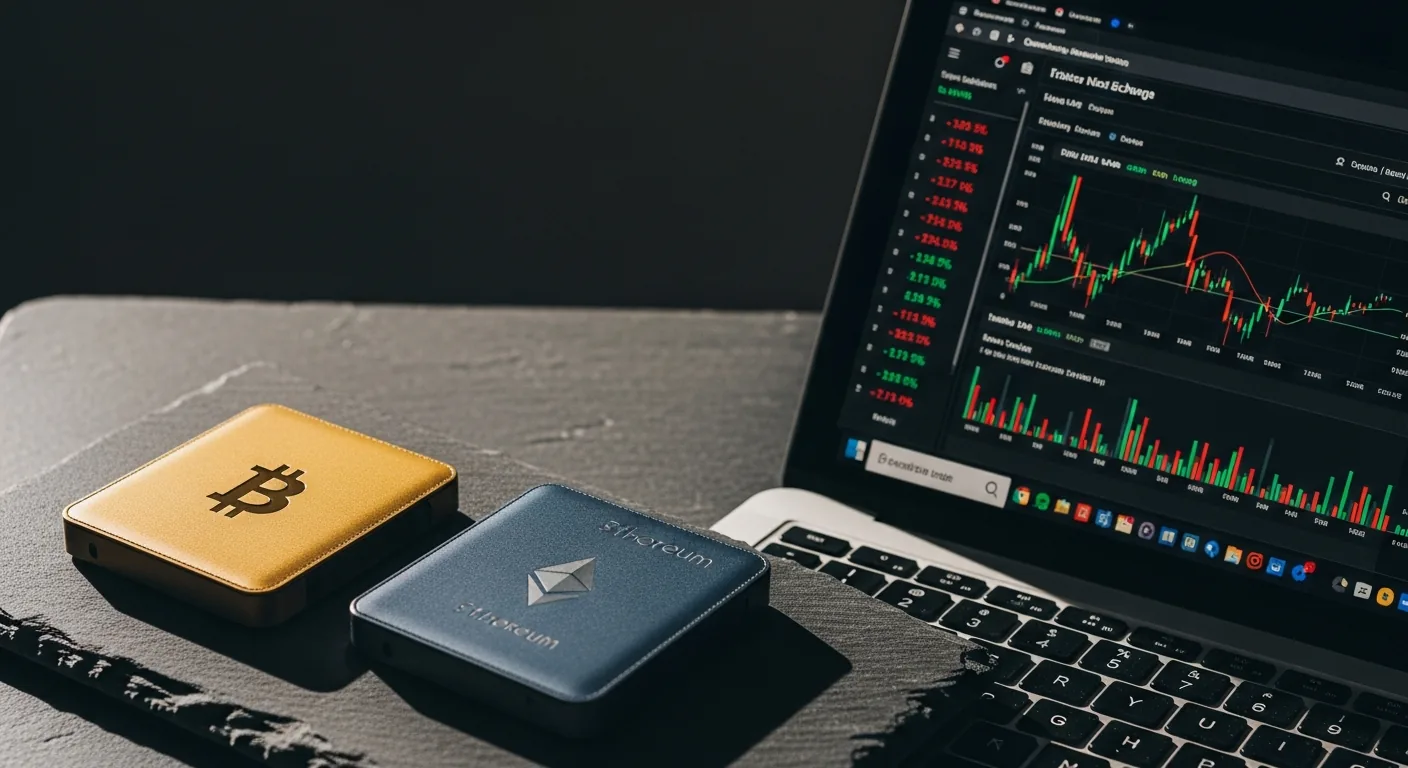
- Ledger Nano X/S Plus — Most popular, supports 5,000+ tokens
- Trezor Model T / Safe 3 — Open-source firmware, trusted since 2014
- Keep seed phrase offline — Written on paper or stamped in metal, stored in a safe
2. Exchange Security
For crypto on exchanges:
- Enable 2FA with an authenticator app (not SMS — SIM swap risk)
- Use a hardware security key (YubiKey) if the exchange supports FIDO2
- Enable withdrawal address whitelisting
- Set up withdrawal time locks (24-48 hour delay for new addresses)
- Use unique, strong password from your password manager
3. VPN for All Crypto Activity
Always use a VPN when:
- Logging into exchanges
- Making transactions
- Accessing DeFi protocols
- Checking portfolio apps
A VPN prevents your ISP and anyone on your network from seeing your crypto activity. On public Wi-Fi, it prevents man-in-the-middle attacks against exchange connections.
4. Clipboard Monitoring
Clipboard hijacking malware watches for crypto addresses and replaces them:
- Always verify the full address before confirming a transaction
- Check at least the first and last 6 characters
- Send a tiny test transaction first for large amounts
- Use QR codes instead of copy-paste when possible
5. Anti-Phishing Measures
- Bookmark exchange URLs — never click links from emails
- Verify the URL carefully (coinbase.com not co1nbase.com)
- Enable exchange anti-phishing codes (custom code shown in real emails)
- Never approve wallet connections from unknown dApps
- Use a separate browser profile for crypto activity
Seed Phrase Security
Your seed phrase (12-24 words) is the master key to your crypto:
- Write it on paper and store in a fireproof safe
- NEVER store digitally — not in photos, notes, cloud, or password manager
- Consider metal backup — Stamp on stainless steel (survives fire and water)
- Split storage — Consider Shamir's Secret Sharing for very large holdings
- Include in your digital estate plan — See our digital estate planning guide
Continue learning
Related Guides
How to Share Passwords Safely: Stop Using Slack and Email (2026)
Secure methods for sharing passwords, API keys, and credentials with teammates. Password manager sharing, Bitwarden Send, and one-time links.
Sarah ChenDevice Encryption Guide: Protect Your Data If Your Laptop Is Lost (2026)
How to enable full-disk encryption on Windows, Mac, iOS, and Android. Your data stays secure even if your device is stolen.
Sarah ChenEndpoint Security for Remote Workers: Beyond Antivirus (2026)
Your devices are endpoints in the security chain. Modern endpoint protection goes beyond antivirus — here's what you need in 2026.
Sarah ChenWas this guide helpful?
What's next